
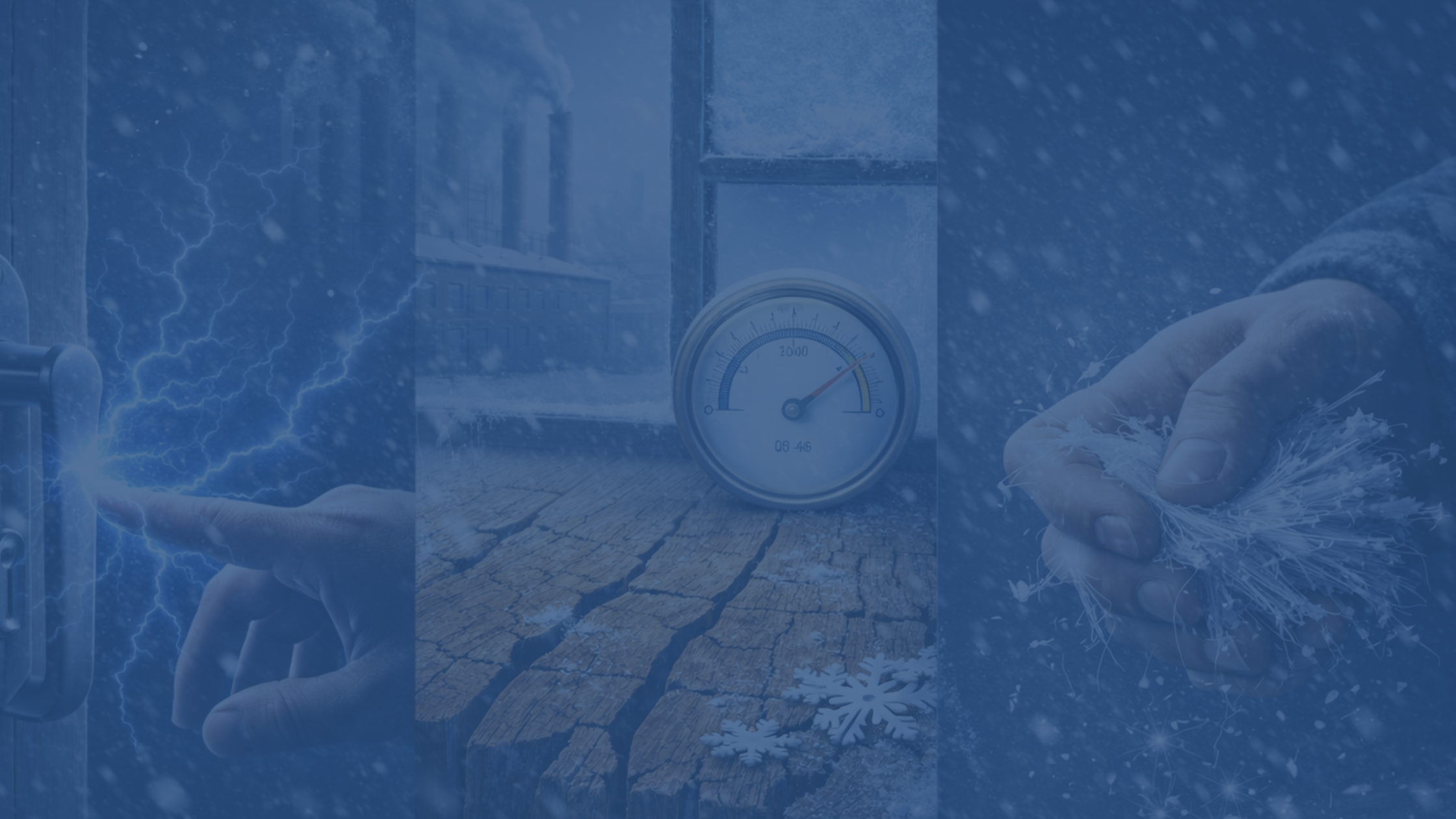
Winter is notoriously the toughest season for facility managers. As temperatures drop, the air outside loses its ability to hold moisture. When that cold, dry air is brought inside and heated, relative humidity (RH) levels plummet, often dropping below 20% if left unchecked.
For textile and wood-product manufacturers, this shift is immediate and damaging. Textile plants face sudden spikes in static electricity and thread breakage, while woodworking facilities see valuable inventory warp, crack, and split before it even reaches the production line.
These aren't just minor annoyances; they are costly production bottlenecks that degrade product quality and eat into your margins. This guide explores the specific humidity challenges these industries face during winter, and provides actionable strategies to stabilize your environment using modern humidification best practices.
Challenge #1: Static Electricity Spikes in Textile Facilities
The Problem:
Extremely dry winter air turns your facility into a static electricity generator. When humidity drops, the air acts as an electrical insulator rather than a conductor. This causes friction (from fibers moving over carding machines or yarns running through winders) to build up significant electrostatic charges.
In textile operations, this leads to:
Frequent thread breaks and machine stoppages.
Poor winding quality and inconsistent tension.
"Ballooning" of yarns and fibers repelling each other.
Uncomfortable shocks for operators, lowering morale.
How to Beat It:
To dissipate static charges naturally, you must increase the conductivity of the air.
Maintain RH Targets: Aim for a consistent RH between 45%–65%, depending on the specific fibers you process (synthetics often require higher levels than natural fibers).
Deploy High-Pressure Systems: Use high-pressure atomizing systems to introduce fine, fast-absorbing fog that raises humidity without wetting machinery.
Local Stabilization: Install nozzles strategically near high-speed machinery (like warping creels or carding zones) to neutralize static right at the source.
Challenge #2: Fiber Brittleness & Breakage
The Problem:
Textile fibers like cotton, wool, or synthetic blends are hygroscopic. They need internal moisture to maintain their flexibility and strength. In dry winter conditions, fibers lose this moisture rapidly, becoming brittle and weak.
This results in:
Increased micro-dust and fly (lint) generation.
Lower tensile strength, leading to snaps during high-speed processing.
Higher rates of waste material and rejected fabric.
How to Beat It:
Uniform Distribution: Ensure humidity is evenly distributed across all production zones, not just near the sensors.
Pre-Winter Checks: Conduct airflow and nozzle output checks before the coldest months hit to ensure your system can handle the peak load.
Optimized Spacing: Use stainless-steel tubing and properly spaced nozzles to create a uniform "moisture blanket" that conditions fibers consistently as they move through the plant.
Challenge #3: Excessive Dust & Lint
The Problem:
Dry air allows dust, lint, sawdust, and microscopic particulates to stay airborne longer. In both wood and textile plants, this creates a "dust bowl" effect during winter.
The consequences are serious:
Health Risks: Increased respiratory issues for workers.
Fire Hazards: Dry, airborne dust is highly combustible.
Quality Issues: Dust settles on wet finishes or contaminates weaving processes.
Maintenance: Equipment filters clog faster, requiring more frequent downtime for cleaning.
How to Beat It:
Suppress with Moisture: Maintaining stable humidity makes dust particles heavier, causing them to settle out of the air faster.
Micro-Droplet Capture: Use high-pressure misting systems (like those from UTR Systems) to create micro-droplets that attach to airborne dust, suppressing it without wetting floors or equipment.
System Integrity: Inspect nozzles and filters to ensure full coverage during peak dust periods.
Challenge #4: Wood Warping, Cracking, and Moisture Loss
The Problem:
Wood is a living material that constantly seeks equilibrium with its environment. In dry winter air, wood gives up its internal moisture rapidly. This causes it to shrink, often unevenly.
For manufacturers of furniture, flooring, or cabinetry, the impact is devastating:
Dimensional Instability: Parts cut to precision tolerances no longer fit together.
End-Splitting & Checking: Stored lumber develops cracks at the ends where moisture loss is fastest.
Warping & Cupping: Boards twist out of shape, becoming unusable waste.
Veneer Failure: Thin veneers dry out and crack or delaminate from the substrate.
How to Beat It:
Species-Specific Targets: Maintain RH in the proper range for your wood species (typically 35%–55%).
Total Facility Coverage: Humidify both processing areas and storage zones. Moving wood from a dry warehouse to a humid production floor (or vice versa) shocks the material.
Sensor Accuracy: Calibrate humidity sensors regularly. A 5% drift in sensor accuracy can mean the difference between stable inventory and a pile of scrap.
Challenge #5: Uneven Humidity Due to Temperature Stratification
The Problem:
Heat rises. In high-ceilinged production plants, hot air accumulates at the top, while cold pockets form near floors or large machinery. Since relative humidity is relative to temperature, these thermal variations create "humidity deserts"; zones where the air is significantly drier than the sensor reading suggests.
How to Beat It:
Multi-Elevation Nozzles: Deploy nozzles at different heights to ensure moisture reaches the working level, not just the rafters.
Air Circulation: Pair humidification with circulation fans to mix the air and prevent stratification.
Zone Control: Use a system that allows independent zone control, so you can adjust output based on the specific microclimate of each area.
Challenge #6: Equipment Stress From Overcompensating
The Problem:
Older or undersized humidifiers run constantly in winter, trying to keep up with the extreme dryness. This constant "100% duty cycle" leads to:
Premature pump failure.
Rapid nozzle scaling.
Uneven water delivery (dripping).
Skyrocketing energy and water bills.
The system never "catches up" because the dry air pulls moisture away faster than the equipment can replace it.
How to Beat It:
Variable-Frequency Drive (VFD): Upgrade to a high-pressure system with VFD technology. This modulates pump speed based on real-time demand, reducing wear and energy usage.
Winter-Critical Inspections: Before winter begins, inspect all filters, valves, tubing, and sensors.
Load Reduction: Reduce the load on your system by sealing building leaks (doors, windows) to prevent dry outside air from infiltrating.
Challenge #7: Over-Humidification in Certain Zones
The Problem:
It sounds contradictory, but over-humidification occurs frequently in winter. If sensors are placed near cold exterior walls or drafty doors, they may call for humidity constantly. Meanwhile, the center of the room gets saturated, causing:
Condensation on cold surfaces (windows, metal beams).
Wet spots on floors (slip hazards).
Swelling of wood products beyond tolerance.
Rust on machinery.
How to Beat It:
Sensor Calibration: Calibrate or replace drifting sensors.
Control Logic: Review your control panel settings. UTR’s systems offer fine-grained zone adjustments to prevent over-saturation.
Droplet Size: Ensure your nozzles deliver the proper, ultra-fine droplet size for fast evaporation before the mist hits a surface.
How to Build a Winter Humidity Strategy for Your Facility
Don't wait for the first cold snap to react. Build a proactive strategy now:
Audit Your Baseline: Walk your floor with a calibrated hygrometer. Map out the RH levels in every zone.
Inspect Hardware: Check filtration, nozzles, valves, and high-pressure lines for wear or clogging.
Identify Danger Zones: Pinpoint areas where humidity dips below your required thresholds (e.g., near loading docks or heaters).
Set a Schedule: Create a winter setpoint schedule based on industry guidelines for your specific materials.
Monitor Frequently: Winter conditions swing wildly. Increase your monitoring frequency to catch issues early.
Call the Experts: If your current system consistently falls short, schedule an evaluation with UTR Systems.
Winter Doesn’t Have to Slow Production Down
Most winter humidity challenges are predictable and preventable. You don't have to accept static shocks, cracked wood, or brittle fibers as the "cost of doing business" in winter.
Stable humidity improves quality, reduces waste, enhances worker comfort, and protects your bottom line. By preparing now and using the right high-pressure technology, you can turn your facility environment into a competitive advantage.
Ready to weather the winter?
Schedule a Winter Humidity Assessment with UTR Systems today to stabilize performance and protect your production environment.